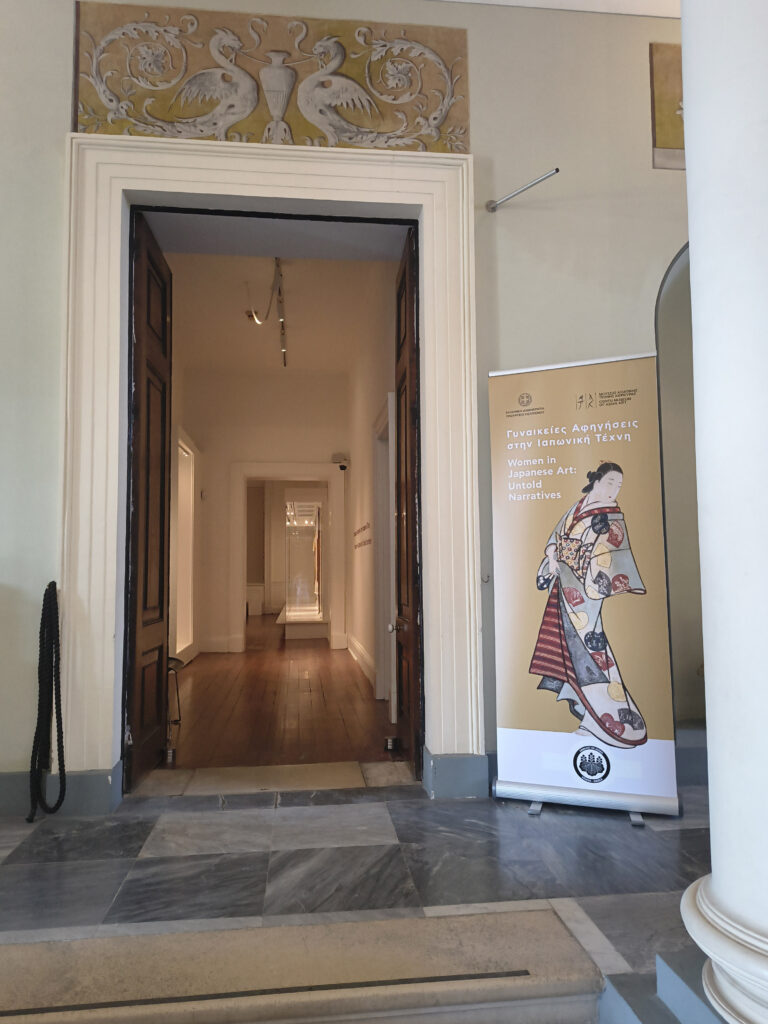



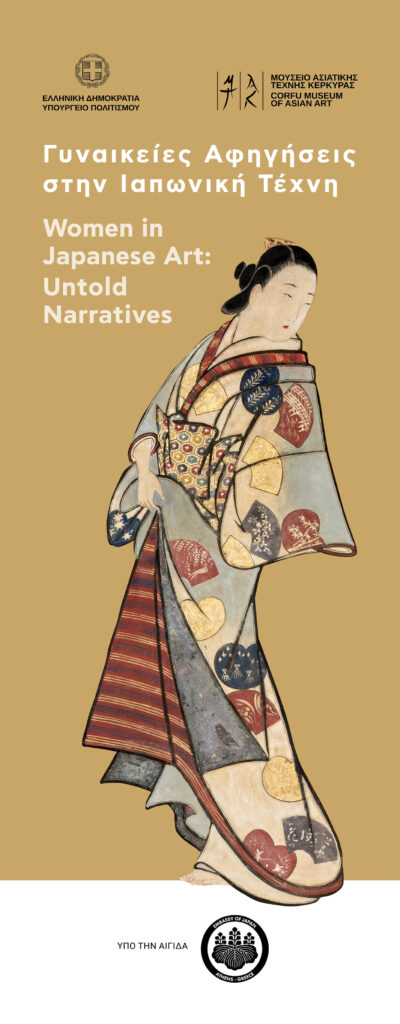
The Corfu Museum of Asian Art explores the world of women through the exhibition “Women in Japanese Art: Untold Narratives”.
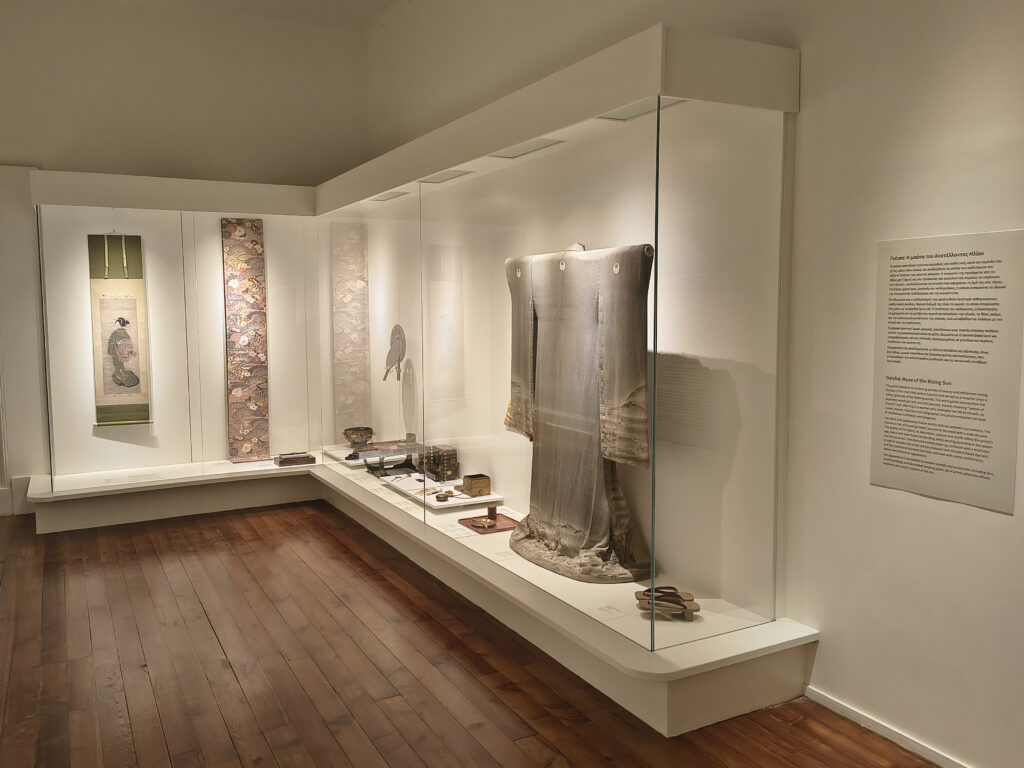
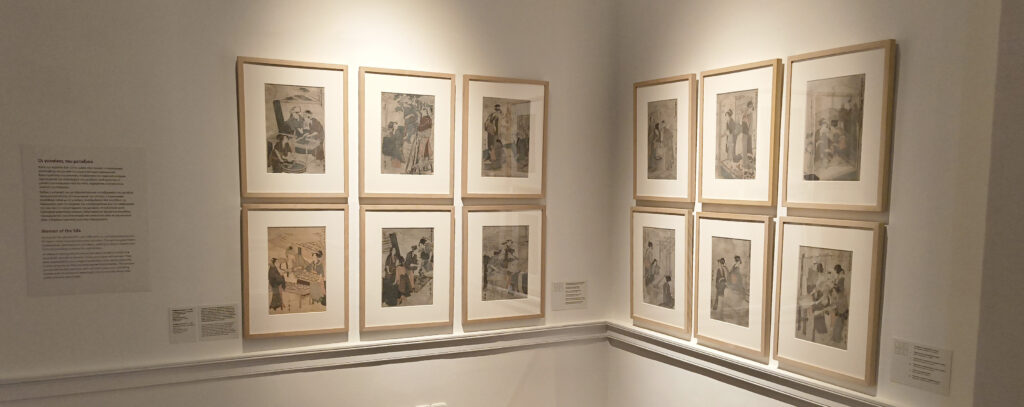
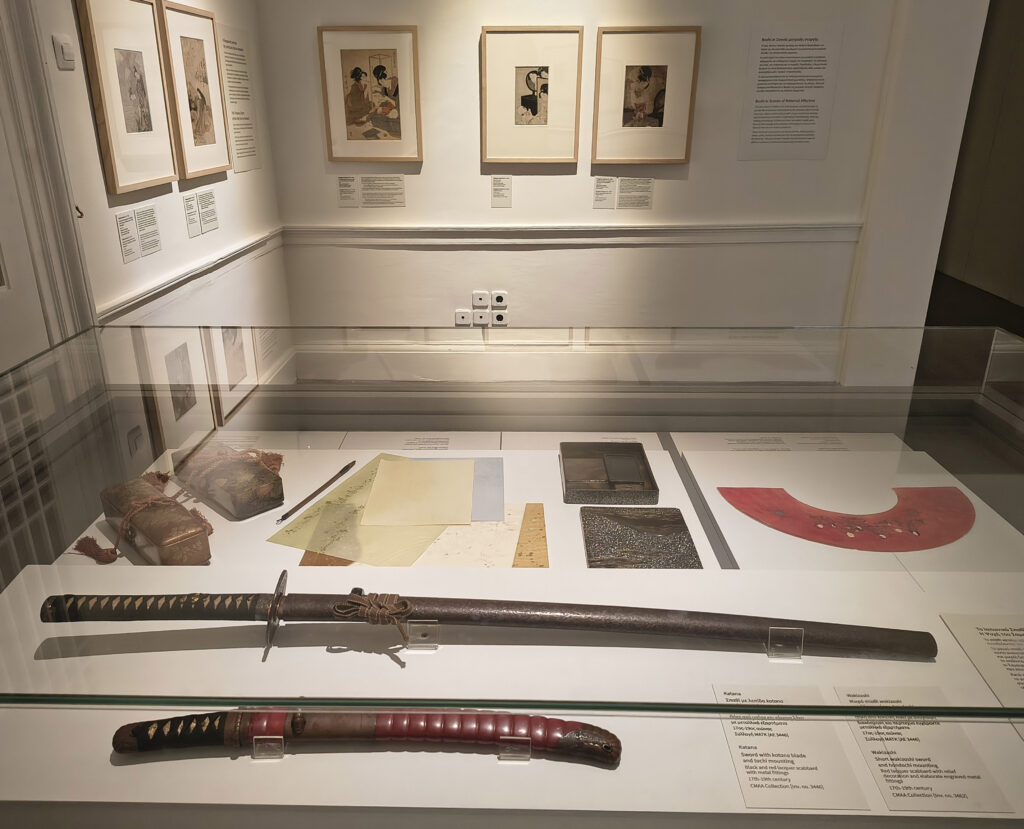
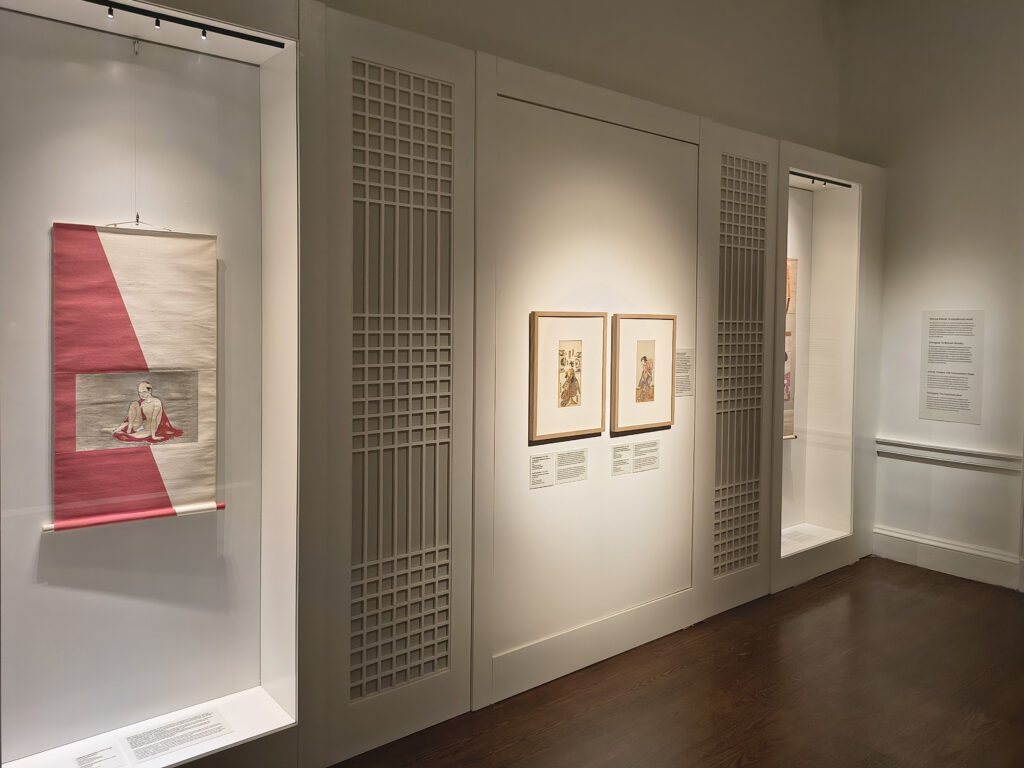
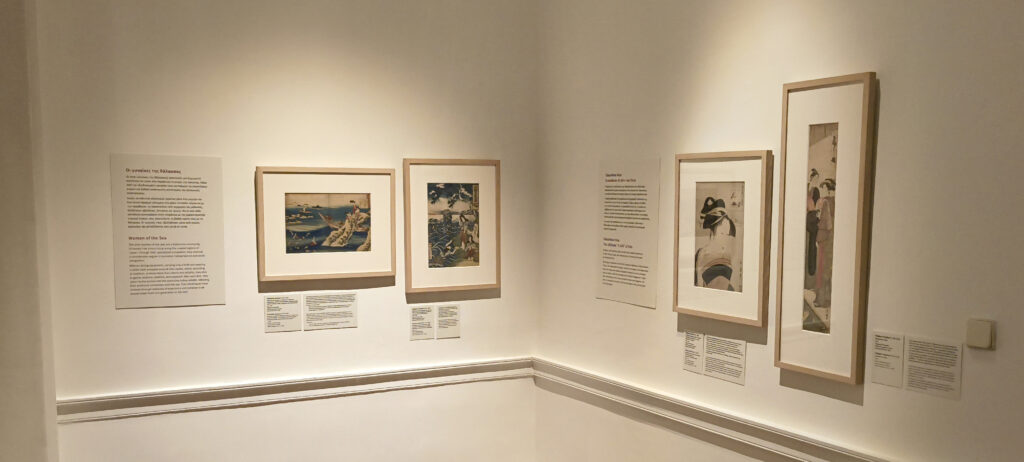
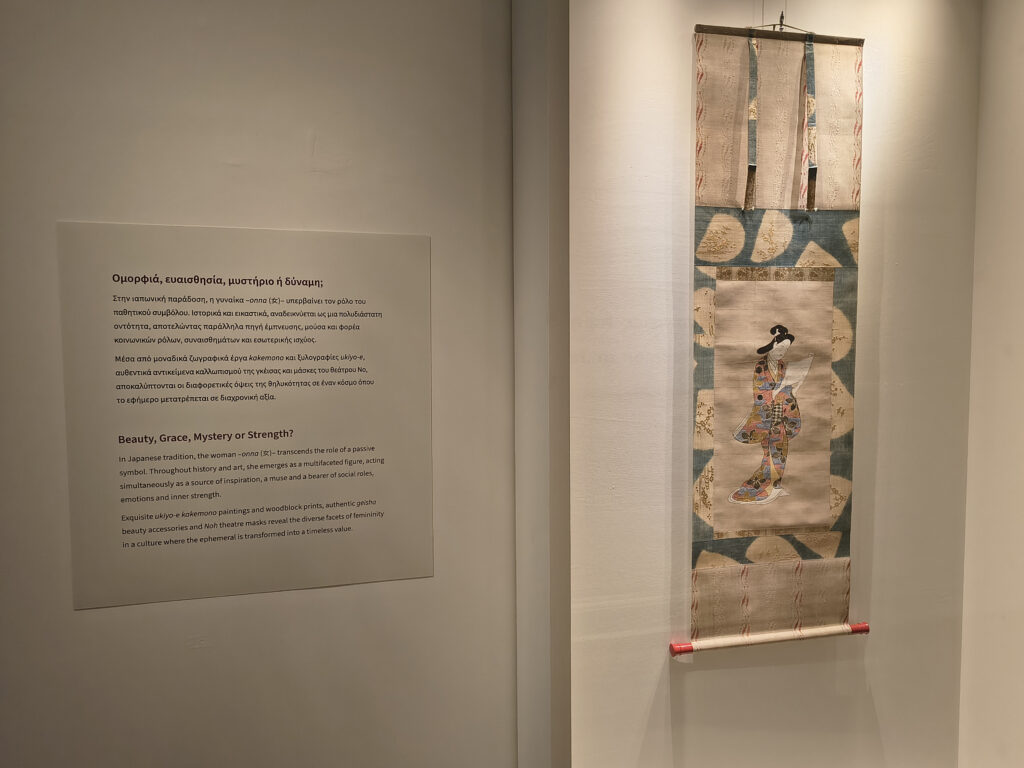
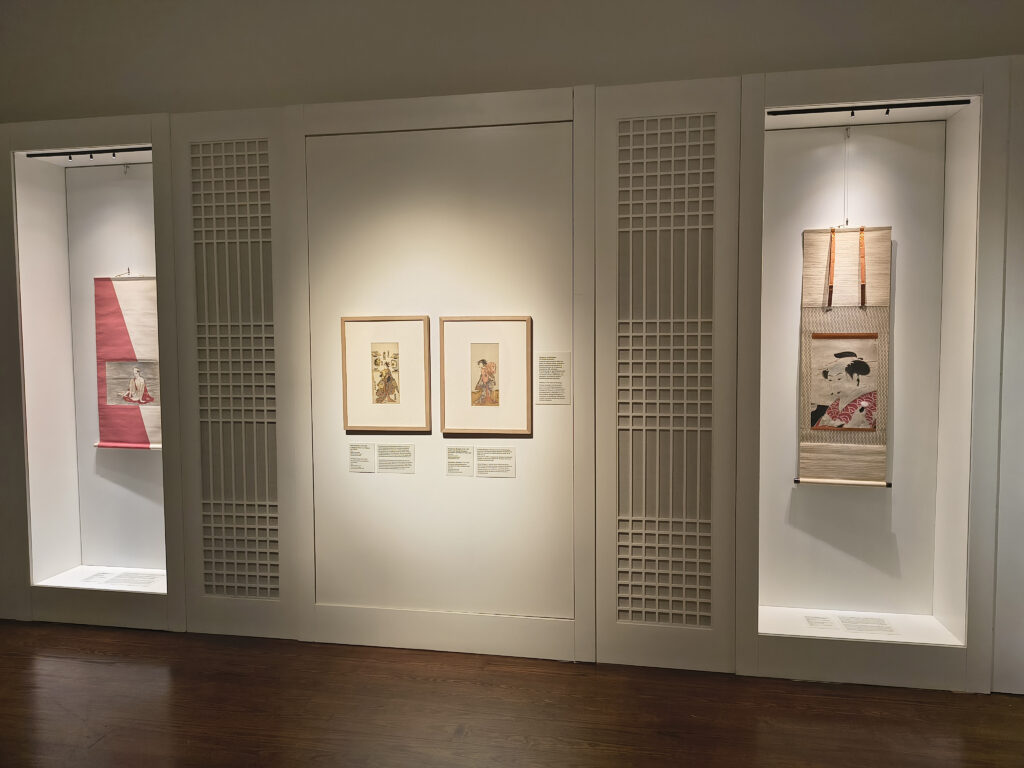
The many facets of women’s presence in Japan during the Edo period (17th to mid-19th century), an era of considerable economic prosperity and cultural flourishing, are brought to light, highlighting the female figure as an enduring source of inspiration. Through kakemono hanging scrolls, ukiyo-e woodblock prints and objects from the period, a rich mosaic of images and narratives unfolds, revealing women as symbols of beauty, creativity, strength and social presence.
A prominent place in the exhibition is given to bijin-ga, “pictures of beautiful women”, which reflect the ideals of urban beauty during the Edo period, with the geisha emerging as an archetype of elegance, refined artistic accomplishment and social sophistication. At the same time, works inspired by Noh and Kabuki theatre highlight transformation as a defining element of Japanese theatrical aesthetics, in which male onnagata actors perform female roles. These figures are represented in masks, hanging scrolls and woodblock prints, offering a complex and compelling exploration of femininity.
The exhibition also includes woodblock prints devoted to emblematic historical and legendary women of Japan, such as the celebrated female samurai Tomoe Gozen, whose figure brings renewed attention to the historically overlooked role of women warriors, and the renowned poet Ono no Komachi, the only woman included among the Rokkasen, the Six Poetic Immortals of classical Japanese poetry.
Particular emphasis is also placed on working women of the period, who gained social visibility through their involvement in key sectors of the economy. Women engaged in sericulture, who played a decisive role in the development of silk production, and the ama divers, who continue to practice the age-old tradition of free-diving, highlight women’s dynamic relationship with labour, nature and the economic life of Japan. At the same time, important woodblock prints illuminate the tender and universal role of the mother, not only as a nurturer but also as a child’s first educator.
Among the exhibition’s most captivating narratives is the figure of the beauty, which transcends the mere representation of physical attractiveness to become a cultural phenomenon. The celebrated beauties of the Edo period shaped fashion trends and became true icons of urban society. They might even be described as Japan’s first “influencers”, the ultimate “it girls”. A characteristic example is the famous “teahouse girl” Takashima Hisa, who achieved almost legendary fame through her portrayal in woodblock prints.
The exhibition reveals an entire world of human experience and culture concealed within each work of art, highlighting different aspects of women’s presence in Japanese society and art. It is organised by the Ministry of Culture and the Corfu Museum of Asian Art and is held under the auspices of the Embassy of Japan in Greece.